You Won’t Believe What I Found in Aqaba – Hidden Art Everywhere
When I landed in Aqaba, Jordan, I wasn’t expecting much beyond beaches and desert views. But what I stumbled upon completely changed my perspective. Nestled between the Red Sea and rugged mountains, this coastal city is quietly becoming a hub for local art and creative expression. From open-air murals to intimate galleries, Aqaba’s art spaces feel raw, authentic, and deeply connected to the region’s soul. It wasn’t on my radar, but now I can’t stop talking about it. What I discovered was not just beauty in unexpected corners, but a growing cultural heartbeat that pulses beneath the surface of a town often overlooked by international travelers.
First Impressions: Aqaba Beyond the Beach
Aqaba greets visitors with warm desert air and the faint scent of salt carried on gentle breezes from the Red Sea. The city’s skyline is modest—low-rise buildings in soft sandstone hues blend seamlessly into the surrounding landscape. For many, Aqaba is synonymous with relaxation: sunbathing on quiet shores, snorkeling in clear waters, or using the port city as a starting point for visits to Petra or Wadi Rum. These are valid reasons to come, but they only tell part of the story. Upon arrival, the initial impression may be one of calm simplicity, yet beneath this tranquil surface lies a subtle but powerful shift taking place—one defined not by grand monuments, but by creativity.
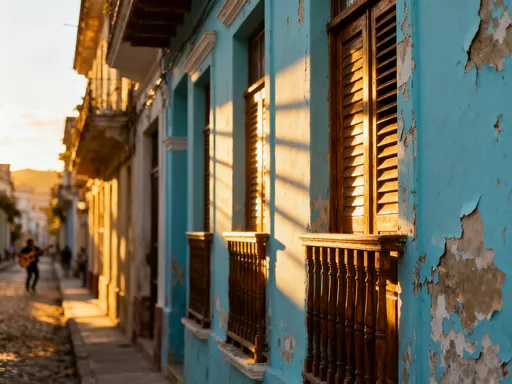
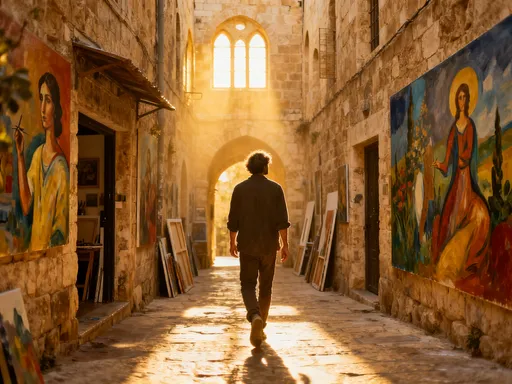
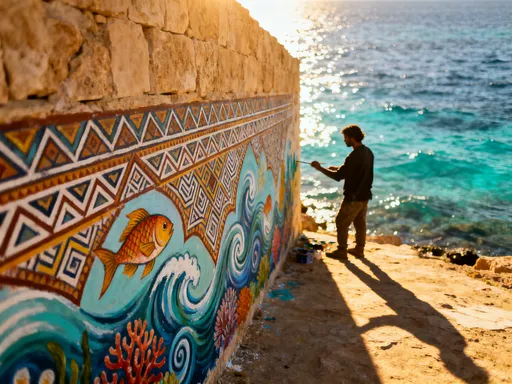
As I walked through the streets near the old souk, I began to notice something unusual: vibrant colors splashed across once-dull walls. A mural of a diving fisherman adorned the side of a bakery. A painted falcon soared across the back of a pharmacy. These were not random acts of graffiti, but deliberate, thoughtful expressions of identity and pride. The contrast between Aqaba’s reputation as a laid-back resort town and its emerging status as a cultural incubator became impossible to ignore. This was not a city trying to mimic Western art scenes; it was telling its own story, in its own voice.
The surprise discovery of art in such unassuming places sparked a shift in my own expectations. I had come for rest, but I found inspiration instead. Each corner turned revealed another visual narrative—some bold and colorful, others quiet and contemplative. What struck me most was how integrated these artworks felt within daily life. There were no velvet ropes or entrance fees, no signs demanding silence. Art here lived alongside people, not apart from them. It was a reminder that culture does not always reside in museums—it often thrives on sidewalks, alleyways, and market stalls.
Street Art with a Story: Murals That Speak
One of the most compelling aspects of Aqaba’s artistic evolution is its street art movement. Unlike some global cities where murals serve primarily as aesthetic enhancements, the public art in Aqaba carries deep meaning. It tells stories of heritage, resilience, and hope. In neighborhoods like Al-Manara and Al-Nahda, entire walls have become canvases for social commentary and cultural celebration. These are not commissioned pieces from foreign artists, but works created by locals who understand the soul of the community.
Themes in the murals reflect the dual identity of Aqaba—rooted in Bedouin tradition, yet shaped by its position as Jordan’s only coastal city. One striking piece depicts an elder in traditional thoub and keffiyeh standing beside a young girl in modern dress, both gazing toward the sea. The image speaks to continuity and change, honoring ancestral wisdom while embracing new generations. Another mural showcases coral reefs teeming with life, a tribute to the Red Sea’s fragile ecosystem and the importance of environmental stewardship. Still others promote messages of peace and unity, using symbols like olive branches and doves woven into geometric Islamic patterns.
What makes these murals especially powerful is their accessibility. They do not require museum tickets or guided tours to be appreciated. A mother pushing a stroller stops to point at a painted turtle with her child. Shopkeepers wave to artists as they add final touches to a wall near their stores. This integration of art into everyday life fosters connection—not just between people and artwork, but among the people themselves. Street art in Aqaba is not rebellion; it is dialogue. It invites passersby to pause, reflect, and engage with questions about identity, sustainability, and belonging.
Moreover, many of these projects are community-led. Local initiatives, sometimes supported by small grants or nonprofit organizations, bring together artists and residents to co-create. Walls that once bore signs of neglect now radiate pride. The transformation is both visual and emotional, turning forgotten spaces into places of shared ownership and meaning. In this way, street art becomes more than decoration—it becomes a form of civic healing, a quiet reclamation of public space.
Hidden Galleries: Small-Scale Wonders Off the Beaten Path
Beyond the streets, Aqaba harbors a network of intimate art spaces that defy conventional expectations. These are not sprawling galleries with international reputations, but modest studios tucked into residential areas, converted homes, or quiet corners of cultural centers. Their unassuming exteriors belie the richness within. Entering one feels less like visiting a formal exhibition and more like being welcomed into an artist’s private world—a space where creativity breathes freely and conversation flows naturally.
One such studio, located just off Talaat al-Hashemi Street, operates out of a former schoolhouse. Inside, the walls are lined with paintings that blend abstract expression with traditional Jordanian motifs. The artist, a self-taught woman in her fifties, greets visitors with tea and stories about her process. Her work often features indigo blues and deep reds reminiscent of Bedouin textiles, layered with calligraphic strokes that echo ancient scripts. She explains that each piece begins with a memory—of her grandmother’s songs, of desert sunsets, of the sound of waves at dawn. This personal connection infuses her art with emotional depth, making it resonate beyond aesthetics.
Another hidden gem is a cooperative gallery run by a group of five artists who share rent and curate rotating exhibitions. The space is small, with natural light filtering through high windows, illuminating sculptures made from reclaimed wood and seashells. One installation combines fishing nets with embroidered fabric, symbolizing the intersection of sea and land, labor and artistry. Visitors are encouraged to touch certain pieces, to sit on handmade stools and talk with the artists during open hours. This level of intimacy is rare in commercial art settings, where distance is often maintained between viewer and creator.
What sets these hidden galleries apart is their authenticity. There is no pressure to buy, no pretense of elitism. Art is presented not as a commodity, but as a shared human experience. Many of the artists rely on word-of-mouth exposure rather than social media promotion. Some do not even have websites. Yet their work circulates through local networks, finding homes in homes, cafes, and community centers across the city. In an age of digital saturation, these spaces offer a refreshing return to slowness, presence, and genuine connection.
Art Meets Community: Cultural Centers as Creative Hubs
Integral to Aqaba’s artistic growth are the cultural centers that serve as anchors for creative activity. These institutions are not grand museums, but functional, community-oriented spaces dedicated to nurturing local talent. Supported by municipal programs, educational partnerships, and occasional international collaborations, they provide resources that artists might otherwise lack—studio space, materials, training, and platforms for exhibition.
One prominent example is the Aqaba Cultural Forum, which hosts regular events including painting workshops, poetry readings, and youth art camps. During my visit, I observed a session where children aged eight to twelve learned to create mosaics using colored tiles and seashells. The instructor, a local artist, emphasized the importance of storytelling through pattern and color. The resulting pieces—depicting fish, camels, and desert flowers—were later displayed in a temporary gallery inside the center. For many of these young participants, it was their first experience creating art in a structured yet joyful environment.
These centers also play a vital role in preserving Jordanian heritage. Traditional crafts such as rug weaving, pottery, and embroidery are taught alongside modern techniques like digital illustration and mixed-media collage. This blending of old and new ensures that cultural knowledge is not lost, while allowing it to evolve. Exhibitions often feature intergenerational collaborations—grandmothers teaching embroidery stitches to grandchildren who incorporate them into contemporary textile art. Such programs reinforce the idea that culture is not static, but a living, breathing entity shaped by each generation.
Additionally, cultural centers act as safe spaces for creative exploration, particularly for women and youth. In a society where artistic careers may not always be seen as practical, these hubs offer validation and encouragement. They host mentorship programs, career guidance sessions, and public recognition events that help artists gain confidence and visibility. Over time, they are shifting perceptions—not only about who can be an artist, but about what art can do for a community.
The Creative Pulse: Who Are the Artists Behind the Work?
At the heart of Aqaba’s art scene are the individuals who choose to create despite limited infrastructure and resources. These artists come from diverse backgrounds—some are formally trained at universities in Amman or abroad, while others are self-taught, learning through observation, practice, and sheer determination. What unites them is a deep connection to place and a desire to express what words cannot capture.
One painter I met studied architecture in Cairo but returned to Aqaba to raise his family and pursue art full time. He describes the city as “quiet enough to hear your thoughts, yet alive enough to feel inspired.” His large-scale works combine architectural precision with dreamlike imagery—ancient watchtowers floating above coral reefs, caravans crossing underwater dunes. He sees his art as a bridge between history and imagination, a way to reimagine the past and future of his hometown.
Another artist, a young woman in her late twenties, uses photography and textile art to explore themes of migration and memory. Her family has lived in Aqaba for generations, and she draws from oral histories passed down by elders. Her most recent series features portraits of elderly residents overlaid with embroidered maps of forgotten trade routes. The effect is haunting and beautiful—a visual archive of lives lived along the edge of sea and desert. She admits that opportunities for artists in Aqaba are still limited, but says the sense of community keeps her rooted. “We support each other,” she says. “When one of us gets a chance to exhibit, we all celebrate.”
Despite their passion, these artists face real challenges. Access to materials can be difficult due to import restrictions and cost. Exhibition spaces are few, and funding is scarce. Yet they persist, often bartering services, sharing supplies, and organizing pop-up shows in cafes or parks. A quiet but growing network has emerged—one built on mutual respect, collaboration, and resilience. Social media has helped amplify their reach, but the core of their strength lies in personal relationships and shared purpose.
Blending Nature and Art: Red Sea Inspirations
Aqaba’s unique geography—wedged between the Red Sea and the desert—profoundly influences its artistic language. The colors of the landscape—turquoise waters, golden sands, deep coral hues, and violet mountain shadows—appear again and again in paintings, textiles, and installations. Artists speak of the sea not just as a view, but as a presence—a source of rhythm, reflection, and renewal.
This connection to nature extends beyond color palettes. Many artists incorporate natural materials into their work. Seashells, driftwood, sand, and salt crystals are used in sculptures and mixed-media pieces. One installation near the Corniche features suspended glass orbs filled with layers of colored sand and tiny seashells, rotating gently in the breeze. Titled Whispers of the Tide, it captures the ebb and flow of time and memory. Another artist creates paintings using pigments mixed with crushed coral and desert minerals, giving the surfaces a textured, organic quality that changes with the light.
Public art installations along the waterfront and in city parks further blur the line between environment and creativity. A series of stone benches carved with marine motifs invites visitors to rest while engaging with art. A mosaic pathway near the youth center depicts the lifecycle of a sea turtle, educating children through beauty. These works do not dominate the landscape—they enhance it, inviting contemplation without disruption. They remind viewers that art and nature are not separate realms, but intertwined forces that sustain and inspire one another.
Even the changing light throughout the day becomes part of the artistic experience. Morning sun casts long shadows across murals, animating their details. Sunset bathes white-washed buildings in pink and gold, turning entire streets into living canvases. Artists often speak of “painting with light,” capturing not just images, but moments—fleeting, fragile, and full of meaning.
How to Experience Aqaba’s Art Scene Like a Local
To truly appreciate Aqaba’s art scene, one must slow down. This is not a destination for checklist tourism, but for immersive, mindful exploration. The best time to visit is during the cooler months—October through April—when temperatures are pleasant and outdoor viewing is comfortable. Mornings are ideal for walking tours, when light is soft and streets are quiet. Late afternoons offer golden-hour views of murals and seaside installations.
Finding art spots requires curiosity more than GPS coordinates. Begin in the city center, particularly around Al-Manara Square, where several large murals are easily accessible. From there, wander toward the old souk and residential alleys—ask shopkeepers or café owners if they know of any local artists or studios open to visitors. Many will point you in the right direction, sometimes even calling ahead to announce your arrival. Respectful engagement is key: ask before photographing people or private spaces, and always support artists by purchasing postcards, prints, or small works if available.
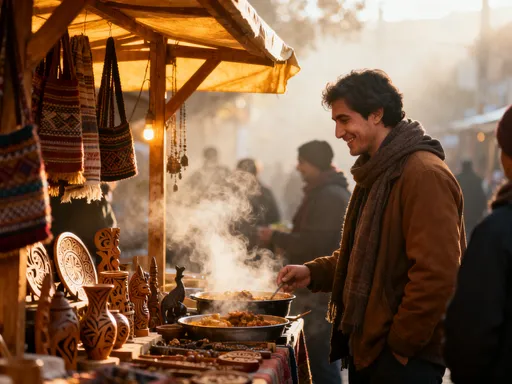
Combine art exploration with other low-key activities. Enjoy mint tea at a family-run café near the cultural forum, where artwork often hangs on the walls. Take a leisurely walk along the Corniche, pausing at public installations. Browse the souk for handmade crafts—ceramics, woven baskets, embroidered scarves—that reflect the same artistic sensibility found in galleries. Consider timing your visit with a community event, such as a weekend art market or youth exhibition, which offers deeper insight into the local creative ecosystem.
The essence of experiencing Aqaba like a local lies in presence. Put away the phone. Listen to stories. Sit awhile. Let the city reveal itself gradually. Art here is not confined to frames or walls—it lives in gestures, conversations, and the quiet pride of a community discovering its own voice.
Aqaba’s emerging art spaces reveal a side of Jordan rarely highlighted in travel guides. This city isn’t just a gateway to Wadi Rum or Petra—it’s a living canvas where tradition and creativity intersect. By exploring its murals, studios, and community centers, travelers gain deeper connection and understanding. More than sightseeing, it’s about witnessing a culture in motion. The real magic? Discovering that inspiration can bloom even in the most unexpected places.