You Won't Believe What I Found in Genoa's Hidden Eaters
Wandering through Genoa, I stumbled upon something incredible—authentic Italian food, untouched by tourist menus. This isn’t just a port city; it’s a flavor vault. From tucked-away trattorias to family-run focaccerias, every bite told a story. If you think you know Italian cuisine, Genoa will make you rethink everything. It’s raw, real, and absolutely unforgettable. What makes this Ligurian capital so special isn’t its grand piazzas or maritime museums—it’s the way food pulses through daily life like a quiet heartbeat. For travelers who value genuine connection over polished experiences, Genoa offers a rare gift: the chance to eat as locals do, where tradition is not performed but lived.
Arrival in Genoa: First Impressions Beyond the Port
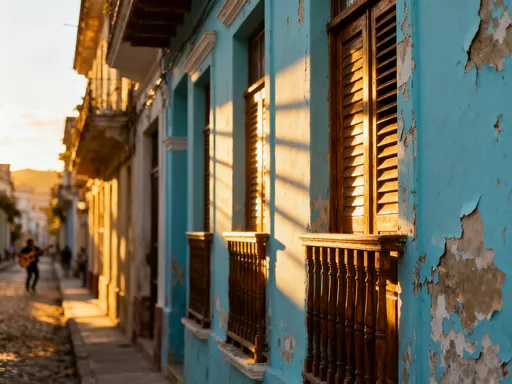
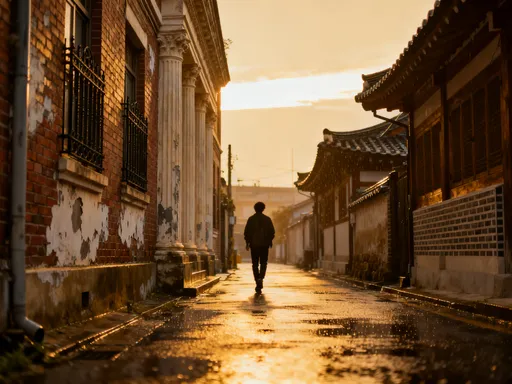
As the train slows into Genova Piazza Principe, the salty tang of the Mediterranean drifts through open windows. The city rises in terraced layers from the harbor, its pastel-hued buildings stacked like books on a crowded shelf. Cruise ships loom in the distance, yet just a few steps inland, the rhythm changes. Narrow alleyways—called caruggi—twist and turn with no regard for logic, connecting hidden courtyards and centuries-old facades. Most tourists pass through quickly, drawn to the nearby Cinque Terre or the Riviera. But those who linger discover a different Genoa: one defined not by postcard views but by the sizzle of garlic in olive oil and the scent of fresh basil carried on sea breezes.
What surprises first-time visitors is how unpolished the city feels—and how much character it gains from that very quality. Unlike Rome or Florence, Genoa does not perform for its guests. There are no velvet ropes around daily life. The markets bustle at dawn, shopkeepers argue over prices, and grandmothers lean from upper windows calling down to neighbors below. This authenticity extends to the food culture. While other Italian cities have adapted menus for international palates, Genoa remains stubbornly true to its roots. You won’t find carbonara on a Genoese menu, nor is pizza margherita the star here. Instead, the cuisine speaks in local dialects—flavors shaped by the sea, the mountains, and generations of quiet craftsmanship.
The city’s maritime history adds another layer to its identity. Once a powerful naval republic rivaling Venice, Genoa built its wealth on trade routes across the Mediterranean. Today, remnants of that legacy linger in the old port, redesigned by Renzo Piano but still alive with fishing boats and ferry traffic. Yet the true soul of the city lies not in its docks but in its kitchens. Food in Genoa is not an attraction—it is the foundation of community. Meals unfold slowly, often without formal invitations, and recipes are passed down like heirlooms. To eat here is to step into a living tradition, one that values simplicity, seasonality, and the quiet pride of doing things the way they’ve always been done.
The Heart of Ligurian Cuisine: Simplicity Meets Tradition
Ligurian cuisine stands apart in Italy for its elegant restraint. Unlike the rich ragùs of Bologna or the butter-heavy dishes of the north, Genoa’s food relies on minimal ingredients executed with precision. At the core of this culinary philosophy is a deep respect for what the region naturally provides. Nestled between the Ligurian Sea and the Apennine Mountains, Genoa enjoys a unique microclimate where fresh herbs flourish, olives ripen early, and small-scale fishing remains a way of life. This geography shapes every dish, creating a cuisine that is light, vibrant, and deeply connected to the land and sea.
Fresh basil is perhaps the most iconic ingredient, forming the soul of the world-famous pesto alla genovese. But true Ligurian pesto is more than a sauce—it is a ritual. Made with basil from the nearby village of Pra, crushed by hand with pine nuts, garlic, Parmigiano-Reggiano, Pecorino Sardo, and the finest local olive oil, it is never cooked. Instead, it is folded into hot pasta at the last moment, releasing its fragrance in a burst of green aroma. The result is a dish that tastes alive—herbaceous, nutty, and subtly sharp. Trofie al pesto, the classic pairing of hand-rolled pasta with this sauce, is not merely a meal but a celebration of regional pride.
Seafood also plays a central role, though not in the way one might expect. Genoese cooking favors subtlety over extravagance. Anchovies are salted and cured, then used to season vegetables or melted into sauces. Sardines are grilled simply, served with lemon and wild greens. Even octopus, when it appears, is stewed slowly with tomatoes and herbs until tender, never fried into crispy novelty. The emphasis is on freshness and balance. Fish markets across the city display the day’s catch with little fanfare—no ice sculptures or neon signs, just baskets of sea bream, mussels, and squid laid out on marble slabs. This humility in presentation reflects a broader cultural value: that good food needs no embellishment.
Equally important is the role of home cooking. In Genoa, restaurants are often an extension of the family kitchen. Many nonne (grandmothers) still prepare Sunday lunch for extended families, serving dishes like pansoti—ricotta and herb-filled pasta served in a walnut cream sauce—or stuffed vegetables from their small garden plots. These meals are not timed for convenience but for connection. They unfold over hours, accompanied by local white wine and stories passed between generations. For visitors, the invitation to share such a meal is a rare honor, a sign of trust and warmth that cannot be bought on any menu.
Focaccia Quest: Why Genoa’s Version Stands Apart
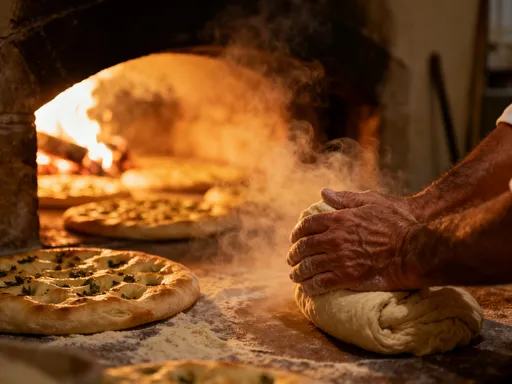
No visit to Genoa is complete without tasting its legendary focaccia. While many Italian cities claim their own version, Genoese focaccia is in a category of its own. It is not thick and doughy like Roman pizza bianca, nor is it crisp and cracker-like as found in some southern regions. Instead, it is soft and airy with a chewy crumb, dimpled deeply by hand before baking to capture pools of golden olive oil and coarse sea salt. The best versions are baked in wood-fired ovens, their crusts slightly blistered and fragrant with smoke. Eating a warm slice straight from the pan is one of the simplest yet most transcendent experiences in Italian cuisine.
The secret lies in both technique and terroir. Local bakeries, known as focaccerie, often use natural yeast starters that have been maintained for decades. The dough rises slowly, sometimes for over 18 hours, allowing complex flavors to develop. Water from Genoa’s hills, rich in minerals, contributes to the texture, while the high-quality olive oil—often from nearby Riviera farms—soaks into the surface during baking, creating a rich, savory finish. Some variations include onions (focaccia col formaggio), while others are topped simply with salt and rosemary. There is even a thinner, crispier version called focaccia di Recco, made with two layers of dough enclosing a molten layer of crescenza cheese—a dish so beloved it has earned protected geographical indication (PGI) status.
One of the most memorable moments on my journey was watching a baker in the old town press his fingertips into a sheet of risen dough, creating the signature dimples with practiced ease. “It’s not just about looks,” he explained. “Each dimple holds the oil, so every bite is flavored.” He offered a piece still warm from the oven, and the contrast of textures—the crisp exterior giving way to a pillowy interior—was nothing short of revelatory. Unlike mass-produced versions found in supermarkets, authentic Genoese focaccia is made in small batches, often selling out by mid-morning. Locals time their visits carefully, knowing that freshness is everything.
What makes this bread more than just a snack is its role in daily life. It is eaten for breakfast with a cappuccino, torn into pieces to mop up sauce at lunch, or wrapped in paper and carried as a snack while shopping. Children receive it as an after-school treat, and office workers grab a slice on their way home. In a city where convenience often trumps quality elsewhere, Genoa’s devotion to proper focaccia is a quiet act of resistance—a reminder that some things should never be rushed.
Off-the-Beaten-Path Trattorias: Where Locals Dine
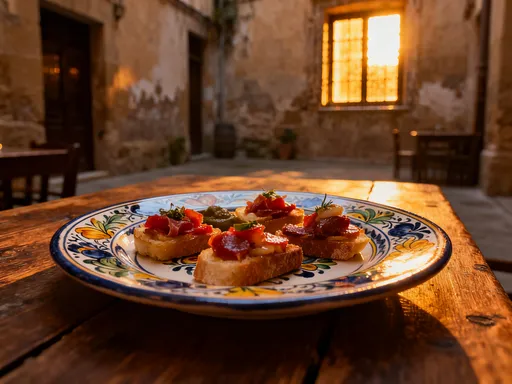
While guidebooks point visitors toward the historic center, the most authentic dining experiences in Genoa happen in quiet residential neighborhoods like Albaro, Castelletto, and Sampierdarena. Here, family-run trattorias operate without websites, social media, or English menus. Reservations are often made by phone, and the welcome is warm but understated. These are not performance spaces for tourists; they are neighborhood institutions where regulars are greeted by name and meals unfold at a natural pace. The decor is simple—checkered tablecloths, wine bottles stacked in corners, and black-and-white photos of past generations on the walls—but the food speaks volumes.
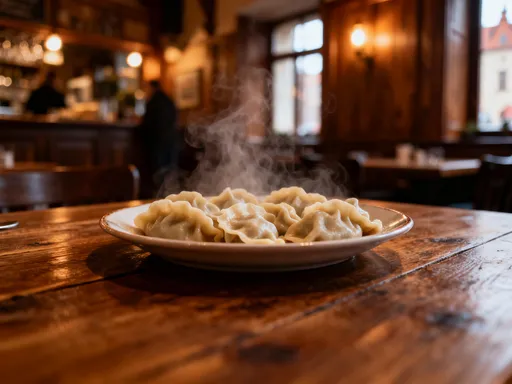
One evening, I followed a local’s recommendation to a small restaurant tucked behind a residential square. The owner, a woman in her sixties, greeted me with a nod and gestured to a corner table. The menu was handwritten on a chalkboard, listing only five pasta dishes and two daily specials. I ordered trofie al pesto, followed by pansoti in salsa di noci—a delicate ravioli filled with ricotta and herbs, served in a creamy walnut sauce. The pasta was clearly made by hand, each piece uneven in shape but perfect in texture. The walnut sauce was rich without being heavy, its nuttiness balanced by a touch of lemon zest. When I complimented the meal, the owner smiled and said simply, “My mother taught me this. I use her recipe.”
Such moments are common in these hidden eateries. Another night, I dined at a tiny spot near the port where the specialty was fresh anchovies—served raw, marinated in lemon and parsley, or quickly fried. The fish had been caught that morning, their flesh cool and clean-tasting. A retired fisherman at the next table offered a nod of approval when I ordered them. “You eat like a Genoese,” he said. No menu translation needed. These restaurants thrive not on marketing but on reputation, passed from neighbor to neighbor like a well-kept secret.
What stands out most is the absence of pretense. There are no tasting menus, no elaborate plating, and no sommeliers reciting wine pairings. Instead, the focus is on nourishment, comfort, and continuity. Dishes are served in the order they are ready, not according to course structure. Wine comes in carafes, usually a crisp local Pigato or Vermentino. The bill, when it arrives, is modest—proof that excellence does not require extravagance. For the discerning traveler, these unassuming spots offer a rare privilege: the chance to eat not as a guest, but as part of the community.
Street Food Gems: Eating Like a Genoese
Genoa’s street food culture is both practical and deeply flavorful. In a city built on steep hills and narrow lanes, eating on the move is not a trend—it’s a necessity. From morning until late afternoon, small stalls and friggitorie (fried food shops) serve quick, satisfying bites that fuel daily life. These are not greasy afterthoughts but carefully prepared dishes rooted in tradition. The most popular offerings include farinata, a chickpea flour pancake baked in wood-fired ovens until crisp at the edges and creamy within, and socca, a similar dish found in nearby Nice but perfected in Genoese hands.
One of the most beloved street foods is the fried seafood platter—fruits of the sea lightly battered and fried to golden perfection. Shrimp, squid rings, and small fish are served in paper cones, meant to be eaten standing up with a squeeze of lemon. The best versions come from stalls near the fish market, where vendors fry only what was caught that day. The batter is light, never overwhelming the delicate flavor of the seafood. Eating it fresh from the fryer, still warm and crackling, is a sensory delight. I once shared a cone with a local woman who advised me to dip each piece in vinegar—“It cuts the oil and wakes up the taste,” she said. Her simple tip transformed the experience.
Another staple is the pizzetta di pasta, a small, savory pie filled with tomato, cheese, or vegetables. Unlike Neapolitan pizza, these are dense and portable, designed to be eaten with one hand while walking. Some bakeries offer them stuffed with leftover pasta or cold cuts, turning yesterday’s meal into today’s convenience. These foods are not marketed as gourmet—they are simply what people eat. Yet in their simplicity lies a kind of culinary wisdom: that good food does not need a table, a reservation, or a camera. It only needs hunger and an open heart.
For visitors, embracing street food is the fastest way to blend in. Locals don’t linger over paper-wrapped snacks; they eat with purpose, often leaning against a wall or sitting on a low step. Joining them—ordering with a polite “Un pezzo, per favore” and following local cues—creates an instant, wordless connection. It’s a small act, but one that bridges cultures. In that moment, you are not a tourist. You are simply someone who appreciates good food, shared in the rhythm of everyday life.
Markets and Food Culture: The Social Fabric of Eating
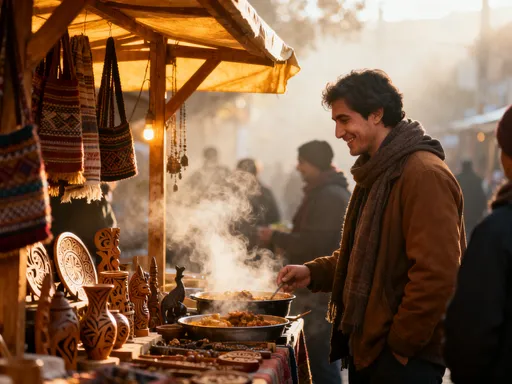
The true heart of Genoa’s food culture beats strongest in its markets. The Mercato Orientale, housed in a 19th-century iron and glass building, is the city’s most famous, but smaller neighborhood markets offer even more intimate glimpses into daily life. At dawn, vendors arrange pyramids of seasonal produce—plump Ligurian tomatoes, bitter chicory, and slender artichokes—while fishermen lay out glistening catches on beds of ice. The air hums with conversation: a woman haggles gently over the price of olives, a man asks for the “sweetest figs for his granddaughter,” and a chef from a nearby osteria samples anchovies before placing an order.
What makes these markets more than shopping destinations is their role as social hubs. They are places of exchange—not just of goods, but of news, advice, and trust. Vendors remember regular customers’ preferences. “You like the wild oregano, no?” one asked me after only my second visit. He handed me a small bundle, unsolicited. “Try this batch—it’s stronger.” These moments of generosity are common. Samples are offered freely—slices of cheese, drops of vinegar, spoonfuls of pesto—inviting customers to taste before buying. This culture of trust reflects a broader value: that food is not a commodity but a shared experience.
Sustainability is woven into this system naturally. Because supply is local and seasonal, waste is minimal. Unsold fish may become stock for a family soup; overripe fruit is turned into jam. Packaging is often just paper or cloth bags. There is no need for certification labels—the transparency of the system ensures quality. When you buy basil from a vendor who grows it himself, you know exactly where it came from. This direct connection between producer and consumer fosters a sense of responsibility and respect that is increasingly rare in modern food systems.
For travelers, visiting a market is one of the most meaningful ways to engage with Genoa. It requires slowing down, observing, and participating. Ask questions in simple Italian, accept an offered sample, and let the rhythm of the place guide you. You may leave with a bag of ingredients for a simple meal, but you’ll also carry something deeper: the feeling of having been welcomed into a living tradition. In a world where authenticity is often staged, Genoa’s markets feel refreshingly real.
From Discovery to Appreciation: Why Genoa’s Dining Scene Matters
Genoa’s culinary landscape offers more than delicious meals—it offers a model for meaningful travel. In an age where destinations are often reduced to checklists and photo ops, Genoa reminds us that the deepest connections come from participation. To eat here is to engage with history, geography, and human care in their most unfiltered forms. Each dish carries the imprint of generations, from the pesto made with basil from sun-drenched slopes to the focaccia baked in ovens that have burned for decades.
Yet this authenticity is not guaranteed to last. As tourism grows, even quiet neighborhoods feel pressure to adapt. Some restaurants now offer English menus and simplified dishes to cater to international tastes. While this brings economic benefit, it risks diluting the very qualities that make Genoa special. The challenge is to welcome visitors without losing soul. This requires mindful choices—from travelers who seek out family-run spots over chain establishments, to locals who continue to value tradition over convenience.
For the thoughtful traveler, the answer lies in slowing down. Ask a baker about his dough. Learn the name of the fish you’re eating. Accept an invitation to share a meal, even if the conversation is halting. These small acts of respect preserve the integrity of the culture you’ve come to experience. They transform tourism from extraction into exchange. In Genoa, where food is woven into the fabric of daily life, such gestures matter deeply.
Ultimately, the city teaches a quiet but powerful lesson: that the best travel experiences are not found in grand monuments, but in humble moments. A shared slice of focaccia. A recipe whispered with pride. A market vendor’s smile when you remember his name. These are the memories that linger long after the journey ends. They remind us that to truly know a place, you must taste it—not just with your tongue, but with your heart.
Genoa’s dining experience isn’t just about taste—it’s about connection. Each meal reveals history, geography, and pride. For travelers seeking more than sightseeing, Genoa offers a quiet revolution on a plate. Eat here, and you don’t just visit—you belong.